
Meet the Four
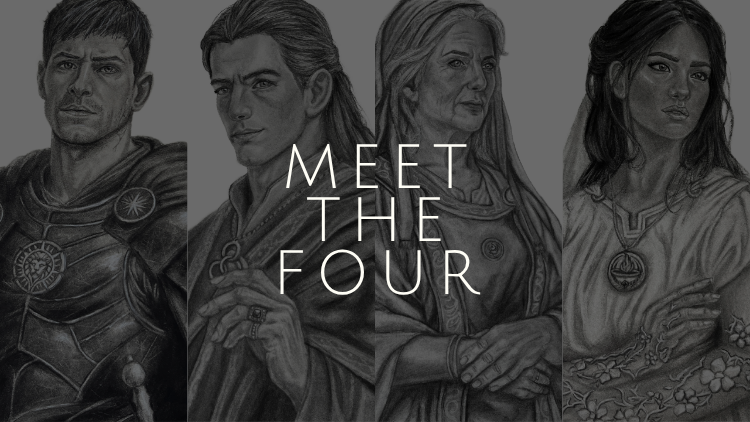
Meet the Four at the Heart of The Emperor's Shadow
Even after twelve years of teaching World History, I still wish we’d been able to spend more time learning about Rome. When you have to cover the history of the world in nine months, the Roman Empire gets a week of class at most. But because the empire had so many ripple effects on European history, it left me with lots of thoughts. Some of them ended up in this book. The ones that mattered most ended up in these four characters.
I am excited to introduce them properly and to show you the portraits by Jonas Cardona, who brought my characters to life. I’ve had these images for months and have been dying to release them into the world.
As a reminder, here is a recap of the world of Valonia. Valonia is an empire held together by three temples. Lex is the god of truth and law, and his priests taste iron on the tongue when someone lies near them. Estia is the goddess of hearth and healing, and her priestesses keep the sacred flame of the empire burning. Drusus is the god of strength, craft, and scholarship; his priests imbue power into the empire’s roads, walls, and steel. The gods only act through people who agree to carry them, and every piece of magic leaves a cost.
Introducing the four main characters:
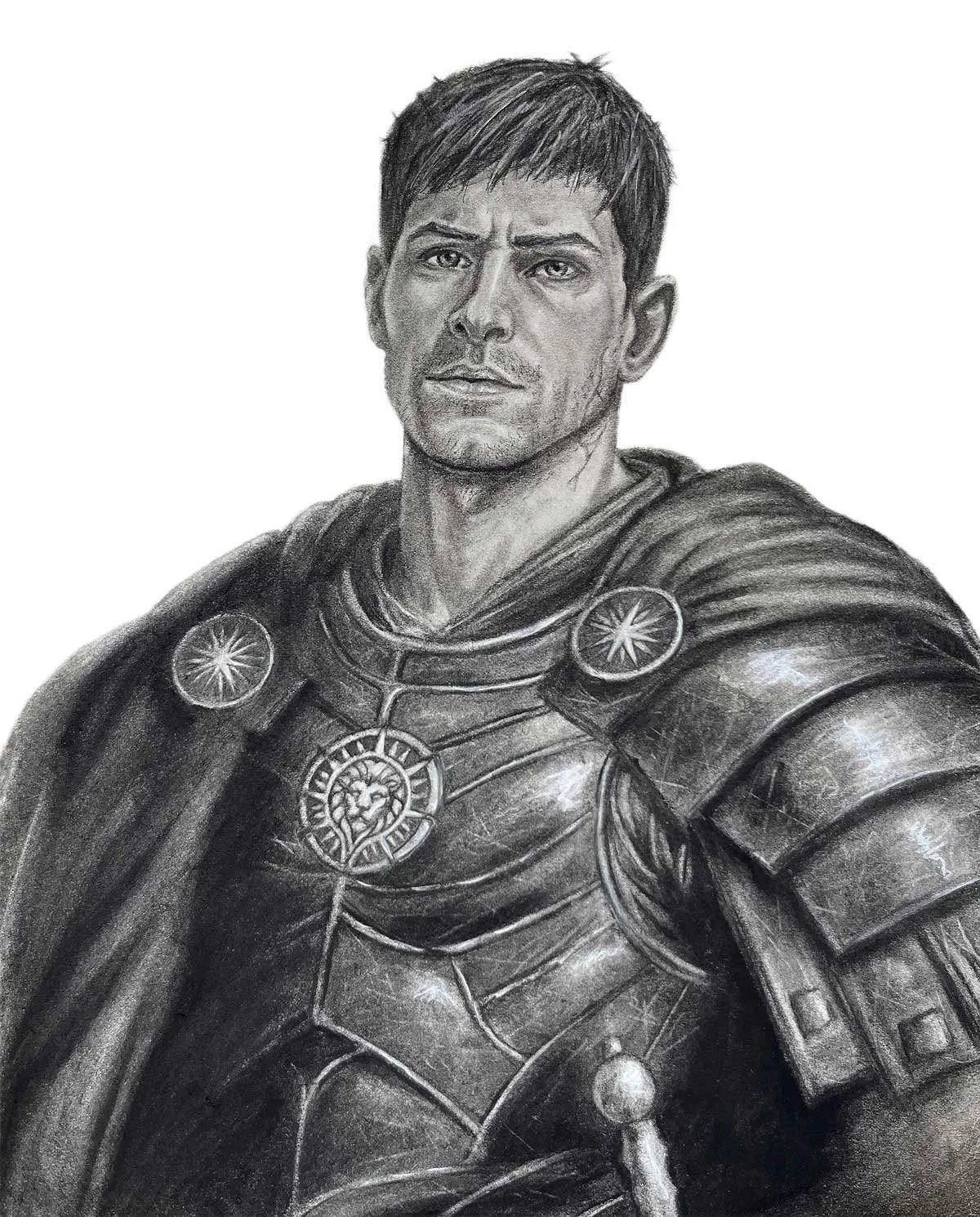
Quintus
© Jonas Cardona, 2026
Quintus Marcellus Aurelianus comes home after five years of war, having won it and tired of fighting. He’s the kind of commander who asks philosophical questions in the middle of a battle. His father is dead. His older brother, Leto, sits on the throne, a scholar who never wanted the throne, and the city can feel Leto slipping.
Quintus believes he can restore what his father let decay and his brother can’t hold. He is honorable (think Maximus from the movie Gladiator). He also has a habit of absorbing a cost and carrying on as though it were free.
I wanted a man you could follow step by step and never once catch being stupid. He knows what he’s choosing, every time.
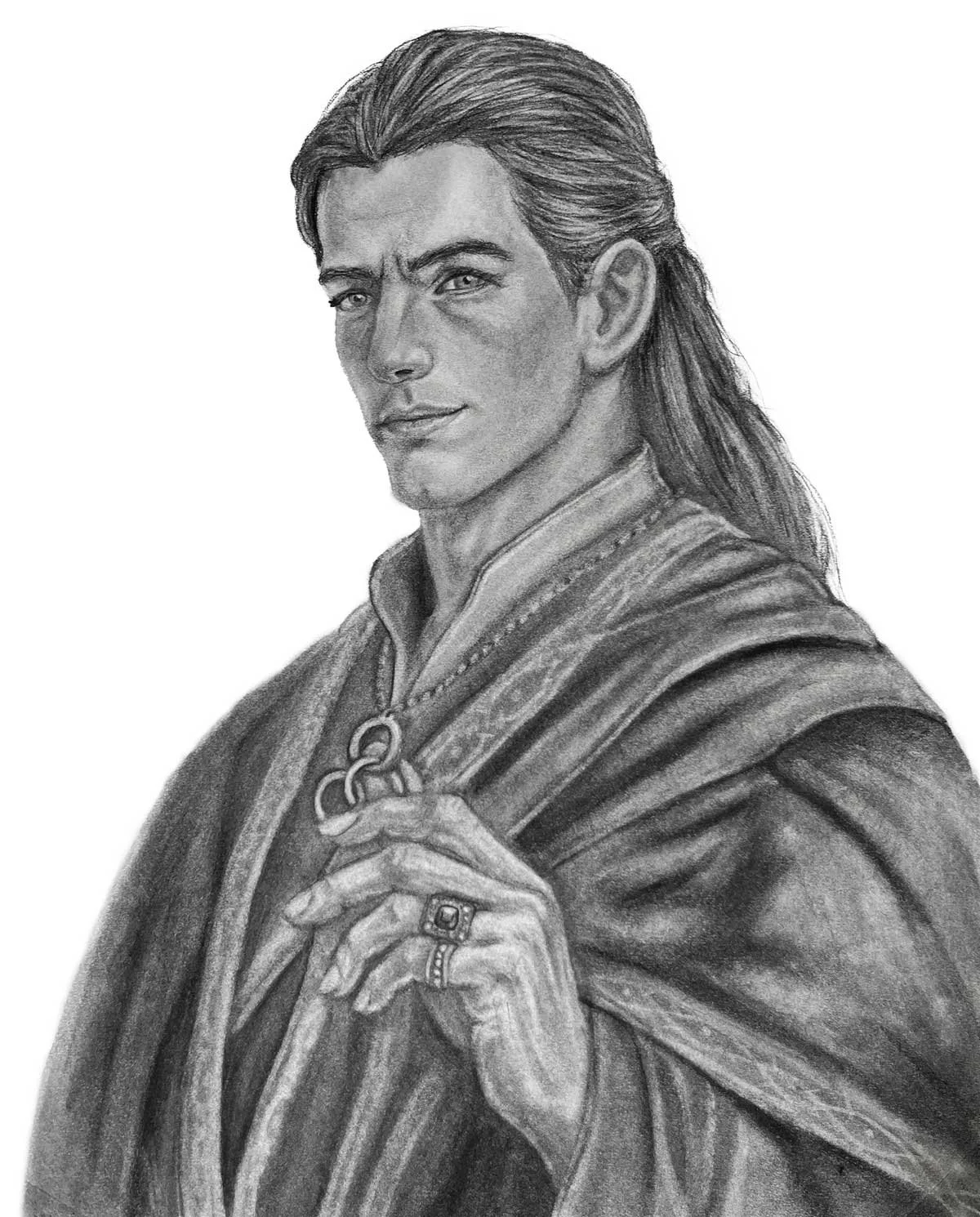
Septimus
© Jonas Cardona, 2026
Septimus has been Quintus’s closest friend for twenty years. They are more like brothers than friends. He’s the only person left who remembers Quintus before the crown was ever on the table.
He is smart and charming, and he understands how the politics of Valonia work at a level Quintus does not. He also believes Valonia is dying. In his view, the temples have buried the gods’ real power under centuries of frightened rules, and someone has to be willing to dig it back up. He believes, sincerely, that he’s the one to do it.
Everything about his warmth is true. He loves Quintus. His grief is real. He is right about the empire more often than anyone would like.
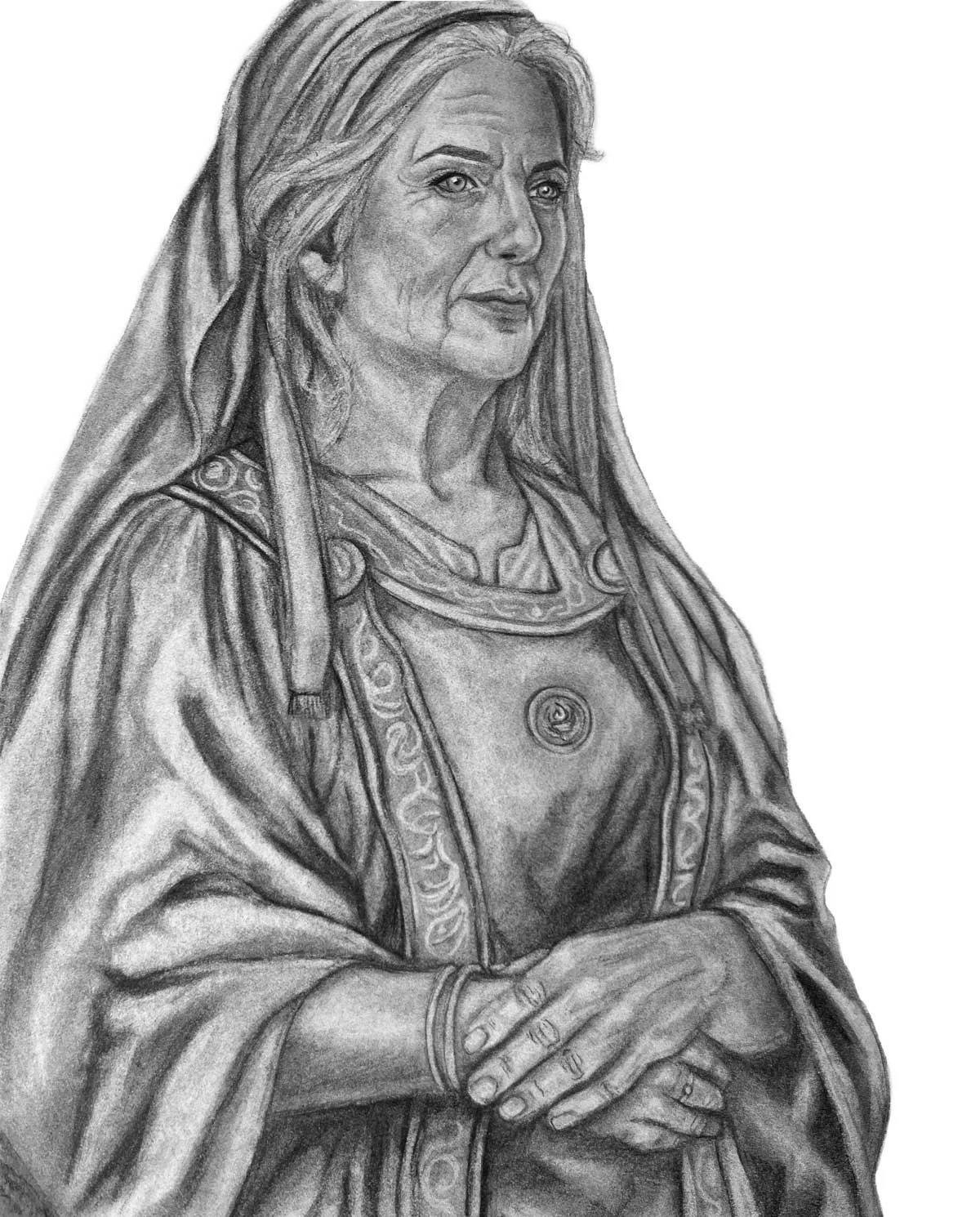
Lydia
Fantasy has a habit with women of Lydia’s age. They hand the hero a sword, deliver a cryptic warning, and die somewhere around chapter four. (I’m sure you’ve read that book.) I wanted a world that was full and robust, and having an older woman was central to that story. In this book, Lydia’s choices directly shape how it ends.
© Jonas Cardona, 2026
Lydia is the Matron of Estia’s temple. She has served at the hearth for fifty years and led it for twenty. During those twenty years, she has been diligent about keeping a wall between the throne and the hearth. She knows doctrine better than anyone alive and knows when and how to stand up for her temple.
She has outlasted emperors, and she has no intention of stepping aside for this one. When the empire starts telling itself a comfortable story, Lydia is the one who stands up and puts the true version on the record. Whether anyone listens is another matter.
Elara
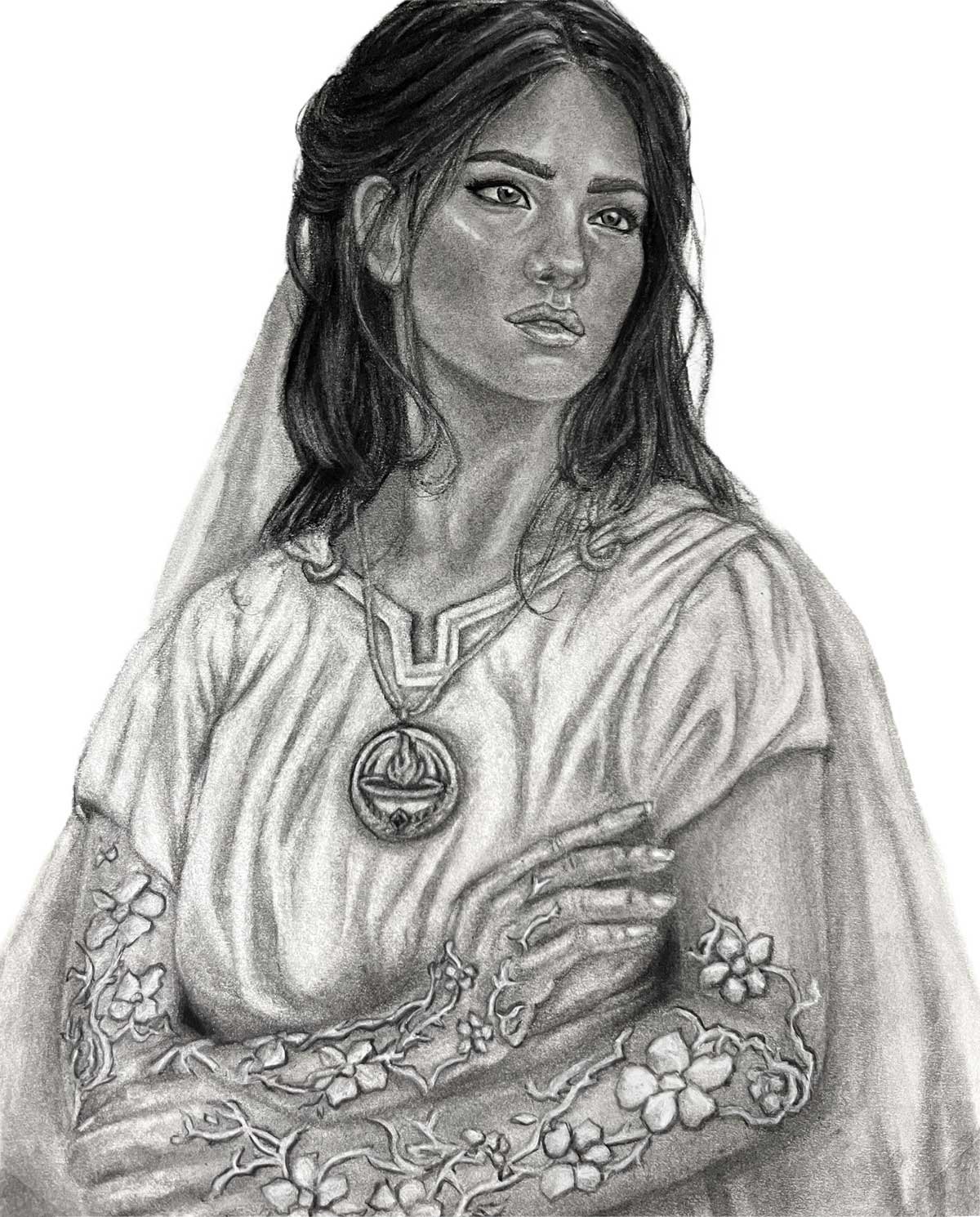
© Jonas Cardona, 2026
Elara is a Luminaria Medicae of Estia, a rare kind of healer who can pull someone back from the edge of death. In Valonia, that gift has a steep price. A deep healing takes years off the healer’s own life, and you can see it on her. Her hands are older than the rest of her.
She knows the price better than anyone. She pays it anyway, one patient at a time, and she has no patience for anyone who wants to call it a sacrifice. To her, it’s the work.
What she wants is simple and very hard to keep: a life that belongs to the goddess and to whoever is bleeding in front of her. Of the four, she was the hardest to write. Steady people often are.
One more thing
I said at the beginning that I wished I'd had more time with Rome. In a way, these four are what I did with that wish. I chose each of them on purpose, built their histories, and thought I knew exactly who they were. Then they started surprising me: a habit here, a line one of them would never cross there, and when I tried to change those things, they wouldn't budge. There's a story that Michelangelo saw David in the marble and carved away everything that wasn't David. He probably never said it, but it's the closest I've come to describing what writing these four felt like.
They aren't the only people you'll meet in Valonia. Rhea, Octavia, Titus, and a few others have their own stories, but these four are the heart of it.
The ebook arrives one week from today. I hope you'll come meet them.
Portraits by Jonas Cardona. The Emperor's Shadow is out now in paperback; the ebook arrives October 12.